Industries are not ready for futures no one has asked them to build
Europe keeps asking whether its industries are ready for the transitions it claims to want. But industries do not become ready in a vacuum: capabilities emerge when ideas become institutions and societies coordinate around a clear direction.
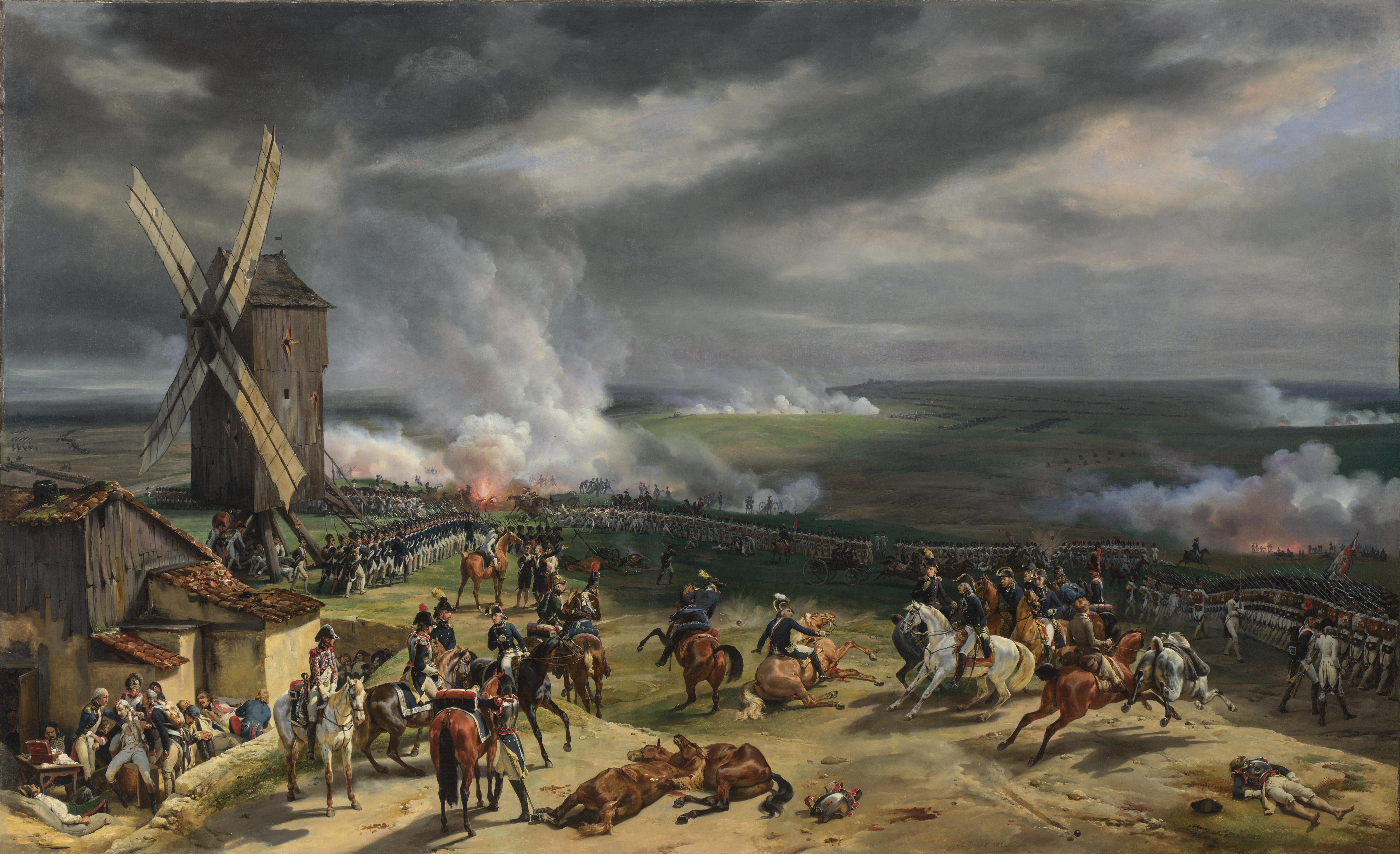
On Sunday 29 April 1792, near Marquain, revolutionary French troops came back from one of the first humiliations of the war against Austria. The offensive into the Austrian Netherlands had barely begun, and already it had collapsed into disorder. Units panicked, discipline broke, officers were suspected of betrayal, and General Théobald Dillon was murdered by his own soldiers after the retreat. The scene captured something deeper than a lost battle: the French army was not ready to defend a revolution against the old powers of Europe.
Its weakness was not simply material. The army was badly organised, politically shaken and still marked by aristocratic command structures at the very moment when the old legitimacy of command had been shattered. Many officers had emigrated. Trust between soldiers and commanders was fragile. A professional army designed for the old regime was suddenly asked to carry the political weight of a new world.
And yet, within a few years, the same country had produced one of the most formidable military machines in Europe. Not because France had magically acquired another geography, another population or another material base. Something else had changed: France had given itself a clear and common goal, and new ideas and institutions capable of organising society around it.
The Revolution did not simply replace one regime with another. It changed the legitimacy of command, opened paths of meritocratic promotion, mobilised citizens at national scale and gave political meaning to military effort. The levée en masse of 1793, associated with Lazare Carnot and the Committee of Public Safety, did not create capability out of nothing. But it coordinated latent capability around a new idea of the nation, a new system of incentives and a new collective objective. Ideas have the power to transform realities.
A little more than a decade after Marquain, Napoleon was marching into Vienna and, at Austerlitz, destroying a combined Austro-Russian army in one of the most decisive victories in European history. The point is not to romanticise war: the same society, under different ideas, institutions and expectations, can reveal capacities that looked impossible from the old framework.
Europe’s self-fulfilling doubt
I came back from the Choose France Summit with one sentence from Emmanuel Macron stuck in my head. Speaking about European competitiveness, investment and confidence, he made a simple point: "if you go around telling the world that you are slow, ugly and not sure whether you will be ready, why would anyone trust you?"
His wording was theatrical, but the diagnosis was serious. Europe’s problem is not only a lack of capital, technology or industrial capacity. It is also a lack of strategic confidence. That lack of confidence appears in the way we regulate. It appears in the way we discuss green industrial policy. And it appears very clearly in the textile sector, around ESPR, recycled-content requirements, potential eco-modulation, sorting capacity, fibre-to-fibre recycling and extended producer responsibility systems.
Again and again, the debate returns to the same question: is the industry ready?
At first sight, that sounds prudent. And prudence matters. A regulation that ignores industrial reality can create absurd costs, displacement, non-compliance or pure regulatory theatre. Europe should listen carefully to operators, brands, recyclers, sorters, PROs, investors and manufacturers. But at the same time listening to industry is not the same as asking the existing system to decide the future.
No industry is ever ready
There is something almost absurd about expecting an industry to be ready in advance for something that does not yet exist. An industry is not a moral subject that wakes up one morning and decides to transform itself. It is a system of assets, contracts, skills, standards, machines, habits, margins, incentives and expectations. Its strength is that it is optimised to do specific things efficiently. That is why industries create scale, reduce costs, improve reliability and make goods widely available.
But the same optimisation that makes an industry powerful in the present makes it structurally conservative in the face of a different future. The current textile industry was not designed to maximise circularity. It was designed over decades to produce large volumes quickly, cheaply and through highly efficient global supply chains. Asking it now to integrate recycled content, traceability, advanced sorting, fibre-to-fibre recycling or new EPR obligations means changing part of its economic logic.
That will not happen because the sector spontaneously becomes “ready”. It will happen if the sector receives a clear enough direction to reorganise itself.
The competitive value of having a clear direction
I will not pretend to be a China expert, but from an outsider point of view, this is precisely the difference between these two political entities. China did not wait for its industries to be naturally ready to dominate batteries, solar panels, electric vehicles or other green markets. It treated these sectors as strategic, aligned public policy, finance, manufacturing capacity, domestic demand and export ambition, and accepted the learning curve required to build capability.
Europe often does the opposite. It identifies the strategic sector, explains why it matters, launches consultations, worries about competitiveness, asks whether the industrial base is ready, softens the signal, waits for evidence of readiness, and then wonders why investment has gone elsewhere. Sector after sector, we lose leadership in markets we helped invent because we lack the ambition and capability to believe in ourselves enough to pull it off.
Of course Europe should not copy China’s political model. It cannot and should not. European legitimacy has to be democratic, plural, rules-based and open to contestation. But Europe can still learn the basic industrial lesson: capabilities are built by direction, not discovered by hesitation.
Green markets are not just environmental markets. They are the next layer of industrial competitiveness (and China knows it). Whoever builds the capacity, standards, supply chains and learning curves first will shape the economics of the sector. In that sense, asking whether European industry is ready can become a way of letting others decide what European industry will later have to buy.
The textile case
Textiles are a perfect example because circularity is still more ambition than system. If Europe wants to solve its waste problem and make recycled content in textiles possible, it cannot simply ask whether sufficient recycled fibre exists today. In many segments, it does not. That is precisely the point.
To make recycled content real at scale, many things have to exist together: separate collection, high-quality sorting, composition data, traceability, recyclability-oriented design, mechanical and chemical recycling where appropriate, stable demand from brands, credible standards, consumer acceptance, investment in plants and markets that can absorb the output.
None of this appears automatically. A sorter will not invest in better technology if recyclers do not need the output. A recycler will not finance capacity if feedstock is uncertain and demand is optional. A brand will not redesign products if regulation remains vague. A PRO will not shape the system ambitiously if the political signal is weak. Investors will not finance infrastructure if they think the target may disappear in the next compromise. Circularity is not a spontaneous virtue. It is a coordinated change in the whole system, and coordinated systems require clear leadership.
The right question is not: “Is the textile industry ready for recycled-content rules?” The right question is: “If recycled content is strategic for 2030 or 2035, what signal, infrastructure, financing and regulatory stability are needed now for the industry to become ready?”
Consultation is not leadership
There is a necessary distinction here. Technical consultation is essential. Policymakers need to understand costs, bottlenecks, technology readiness, investment cycles, quality constraints, trade-offs and unintended consequences. Badly designed regulation can destroy credibility quickly.
But consultation cannot replace strategic direction. The industry can explain what is difficult. It can show where timelines are unrealistic, where standards need refinement and where incentives are misaligned. That knowledge is indispensable. But if the present system alone defines the horizon, the future will always look impractical. The role of leadership is not to ignore constraints. It is to make constraints governable by setting a direction around which actors can coordinate.
Europe needs that kind of confidence in civilian, industrial form. The ability to say: this is the direction; this is the timeline; these are the resources; these are the costs we will distribute; these are the rules that will not change every six months.
So the question should not be whether industry is ready today. The question should be what Europe must do today so that industry can be ready tomorrow. That means separating three levels that are often confused.
- First, strategic direction: what kind of economy does Europe want to build?
- Second, technical design: how should that direction be translated into rules, timelines, metrics, exemptions and correction mechanisms?
- Third, industrial execution: what investments, infrastructures, markets and skills are needed to make the transition real?
Industry must be deeply involved in the second and third levels. But political leadership cannot outsource the first.
Closing
The most dangerous thing Europe can do is to confuse prudence with lack of belief. If Europe says that circularity is strategic but acts as if it doubts its own ambition, investment will hesitate. If investment hesitates, capacity will not appear. If capacity does not appear, Europe will discover that its doubts were justified. That is the self-fulfilling prophecy.
Industries are not ready for futures no one has asked them to build. They become ready when a society decides that a future is worth building, either through consumer behaviour (buying it) or citizen behaviour (voting for it), gives that future institutional form and coordinates the actors capable of making it real.
Europe does not need to pretend that transformation is easy. It needs to stop behaving as if difficulty were proof that the direction is wrong.
